Curtis Hale
07

Great Parks

01

Business Context

A public institution. A mandate to serve everyone.

Great Parks of Hamilton County has been preserving and protecting natural resources near Cincinnati, Ohio since 1930. Today the system encompasses 17 public parks and 4 conservation areas, drawing 500,000 visitors annually across a genuinely diverse public — families with young children, seniors, outdoor enthusiasts, casual day visitors, organized groups, and school programs.

That diversity is the defining context for every design decision. A private brand can narrow its audience and optimize for a specific user. A public park system cannot. The website had to serve all of them — clearly, efficiently, and beautifully.

Stage:

Established public institution with a recent rebrand and a digital presence that hadn't kept pace with either the scale of the organization or the expectations of its audience

Market position:

The primary public green space resource for the greater Cincinnati area — not competing for visitors so much as responsible for serving them. The website is operational infrastructure for a half-million people a year.

Brand maturity:

A completed rebrand provided a strong visual foundation. The challenge was building a digital system worthy of it — and then improving that system, iteratively, over nearly a decade of ongoing partnership.
Great Parks
17
Parks in the Cincinnati area
4
Versions of the website
500 K
Park visitors per year
02

The Alignment Problem

Vast content. Diverse audience. One coherent experience.

Great Parks arrived at the engagement with a new brand, 17 parks worth of content, and a website that couldn't organize or present any of it effectively. The information architecture problem alone was significant — but the challenge extended well beyond structure.

The alignment gaps were layered:

Content volume without hierarchy — 17 parks, 4 conservation areas, hundreds of events, multiple activity types, trail maps, program registrations, and ticketed events all needed to coexist in a single easily navigable experience without overwhelming any user regardless of what they came to find

Third-party systems that needed to feel native — the events and ticketing system was powered by an external platform. Seams between owned and third-party experiences are where trust breaks down, especially for public institutions. The integration needed to be invisible to the user.

KML trail data that had never been surfaced digitally — walking trail data existed as raw KML files with no front-end presentation layer. Making that data useful to a casual park visitor required both technical integration and UX design from scratch

A universal audience with no common denominator — the site needed to work equally well for a grandmother looking for a nature program, a family planning a weekend hike, and a corporate group booking an event. No single user flow could be optimized at the expense of another

A relationship, not just a project — the most important alignment challenge was organizational. Great Parks needed a creative partner capable of evolving their digital presence over time — not a vendor who delivered a site and moved on

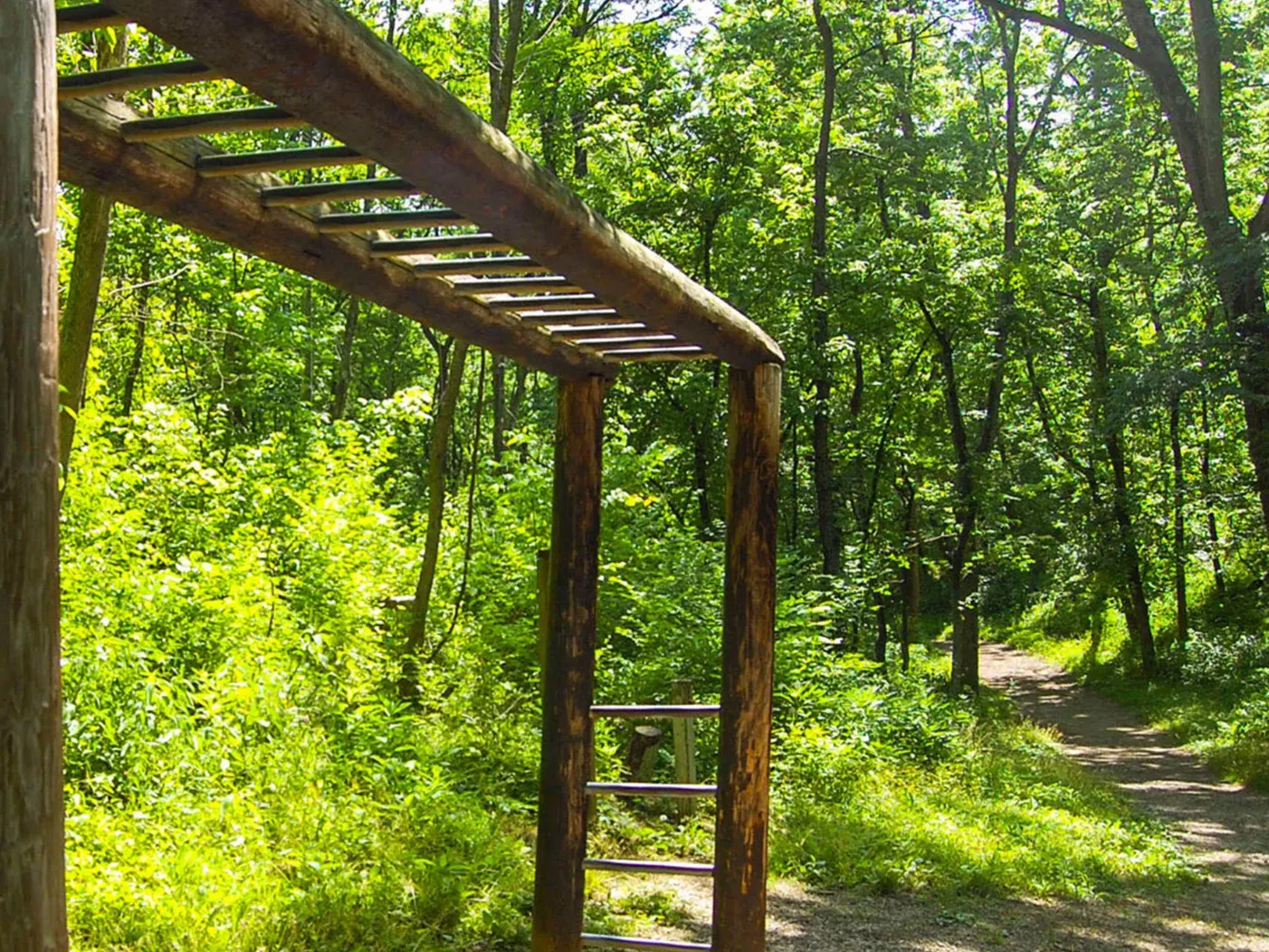
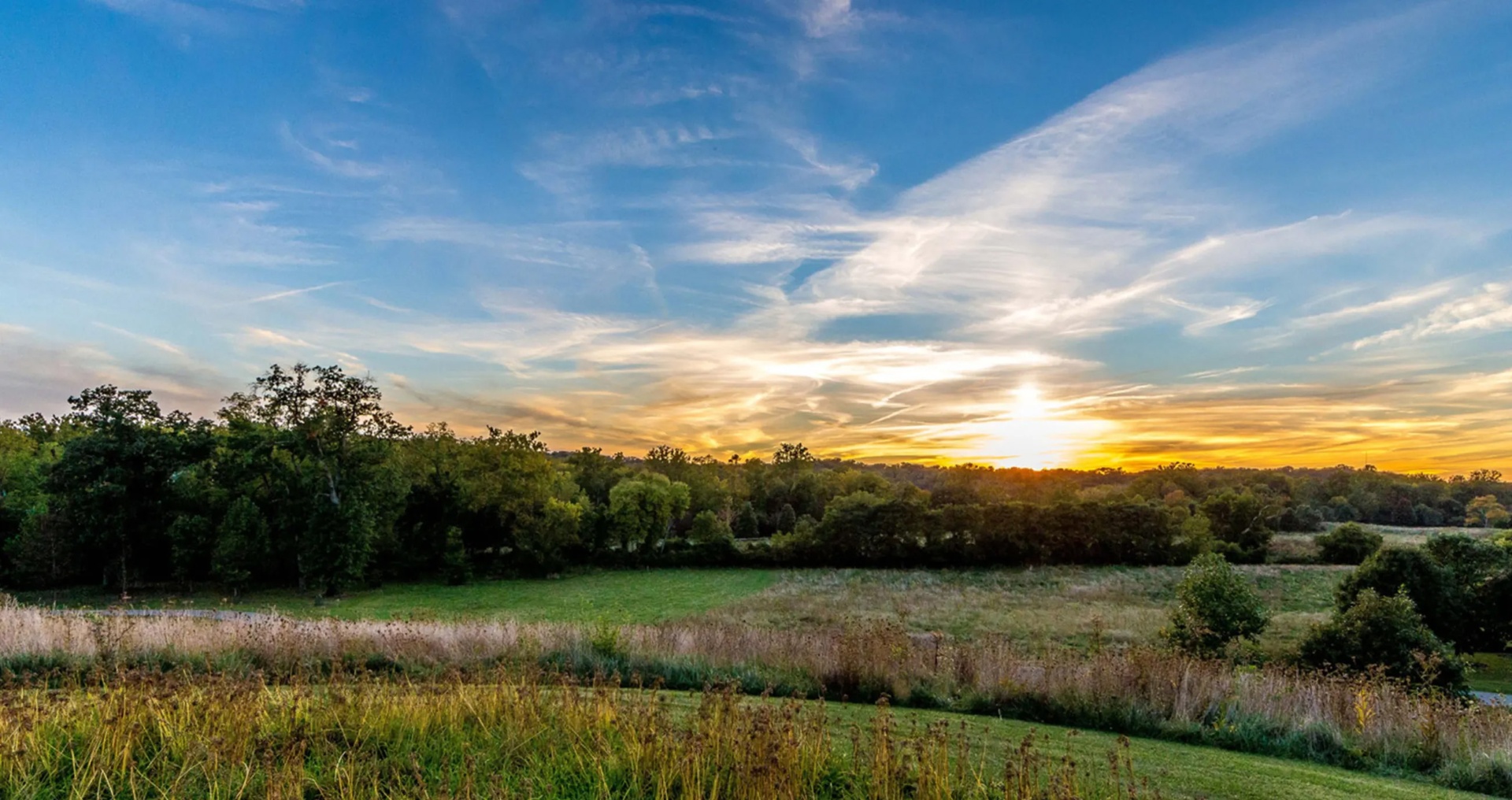
Sunset over rolling Great Parks meadow with wide skyWooden trail archway leading into a sunlit Great Parks forest path
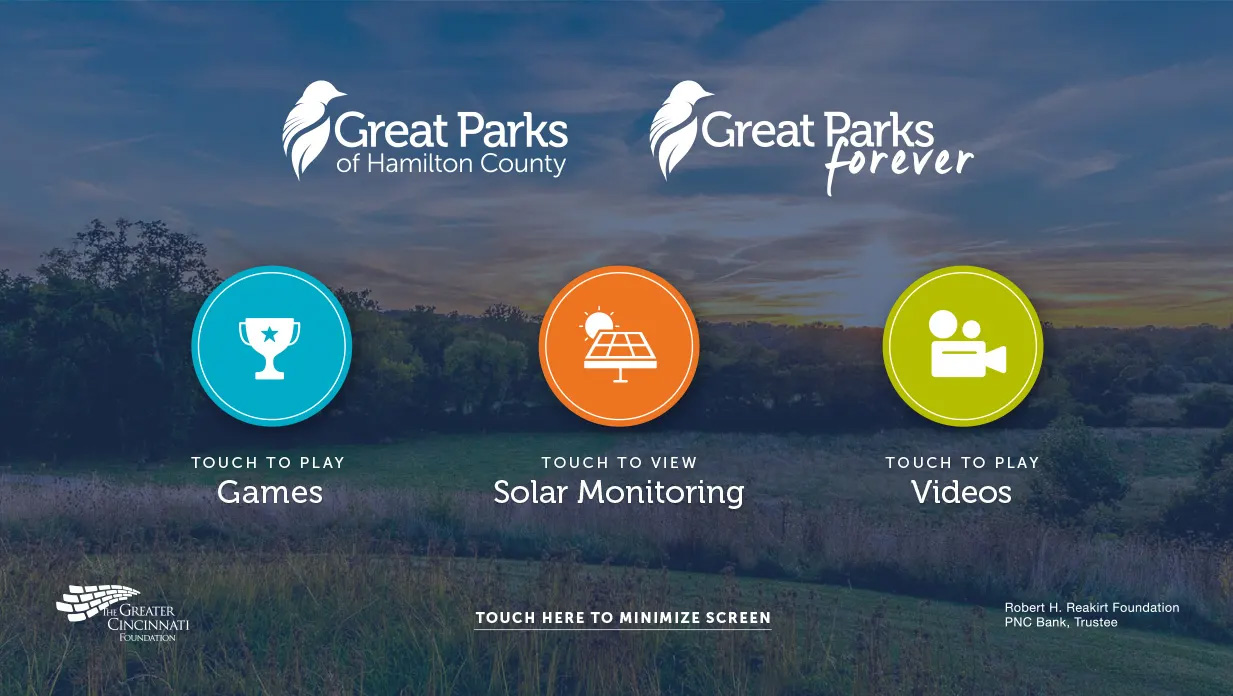
Great Parks interactive kiosk welcome screen with Games, Solar Monitoring, and Videos options
03

Strategic Framework

Build for today. Design for iteration.

The strategy that shaped the first engagement — and every version that followed — was rooted in a single conviction: the best website Great Parks could have wasn't the one launched on day one. It was the one that would exist after years of real visitor behavior had informed how it should work.

That conviction shaped how the first version was built. Rather than optimizing for aesthetic ambition at the expense of measurability, the architecture was designed to generate usable data — visitor behavior, navigation patterns, content engagement — that could drive genuine improvement in subsequent versions.

Information architecture as the primary design problem Before any visual design began, I led the IA process — mapping the full content inventory across 17 parks, defining the taxonomies that would govern how events, activities, trails, and park information related to each other, and establishing the navigation architecture that would allow any visitor to find what they needed regardless of how they entered the site. This was the hardest design problem in the engagement and the one most invisible to the final user — which is exactly how good IA should work.

Third-party integration strategy The events and ticketing system integration via Governor CMS was approached as a UX problem, not a technical one. The goal was not simply to connect two systems but to make the handoff between owned content and third-party ticketing feel seamless — so that a visitor moving from a park events page to a registration flow never felt like they had left the Great Parks experience.

Trail mapping as a visitor utility KML trail data was transformed from raw files into an interactive map experience — giving visitors the ability to explore trail options, distances, and difficulty before arriving at the park. This feature required both technical integration and design from scratch, with no existing pattern to reference.

Iterative design as a standing methodology When the second version of the site was commissioned, analytics and user behavior data from version one drove every significant decision. Pages with high bounce rates were restructured. Navigation paths that users abandoned were redesigned. Content that proved most valuable was elevated. This data-informed iteration process — not just redesigning by instinct but redesigning by evidence — became the methodology for every version that followed.

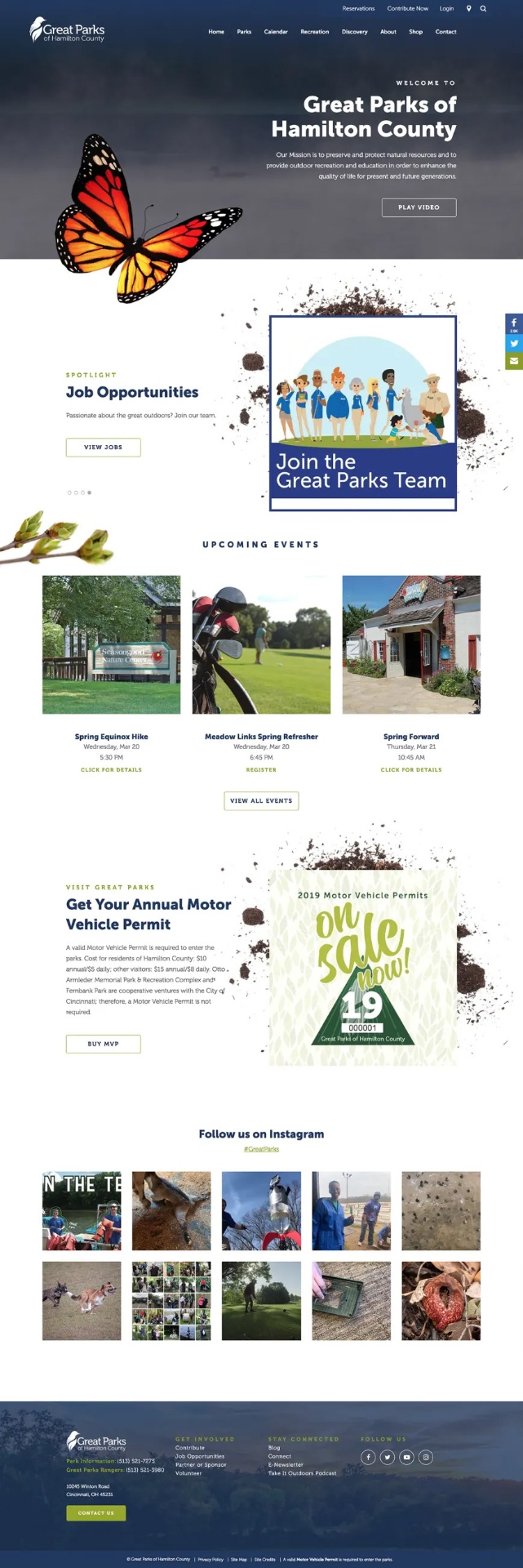
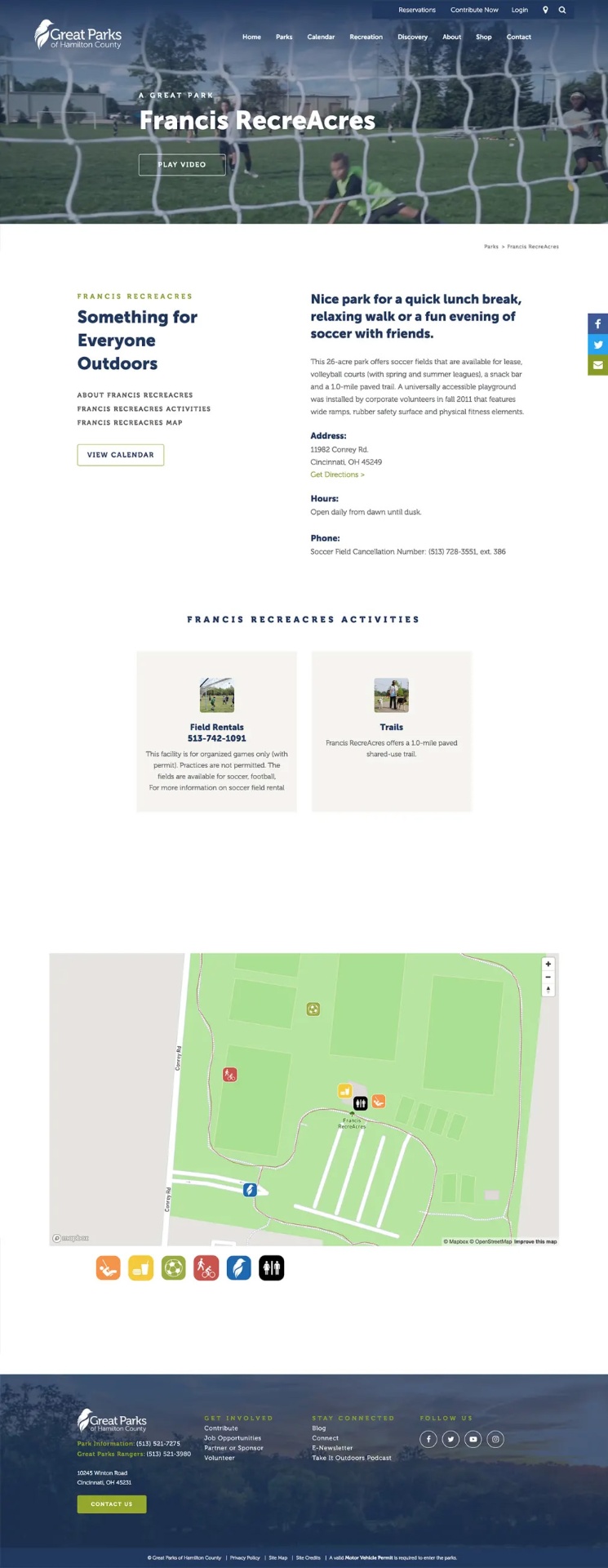
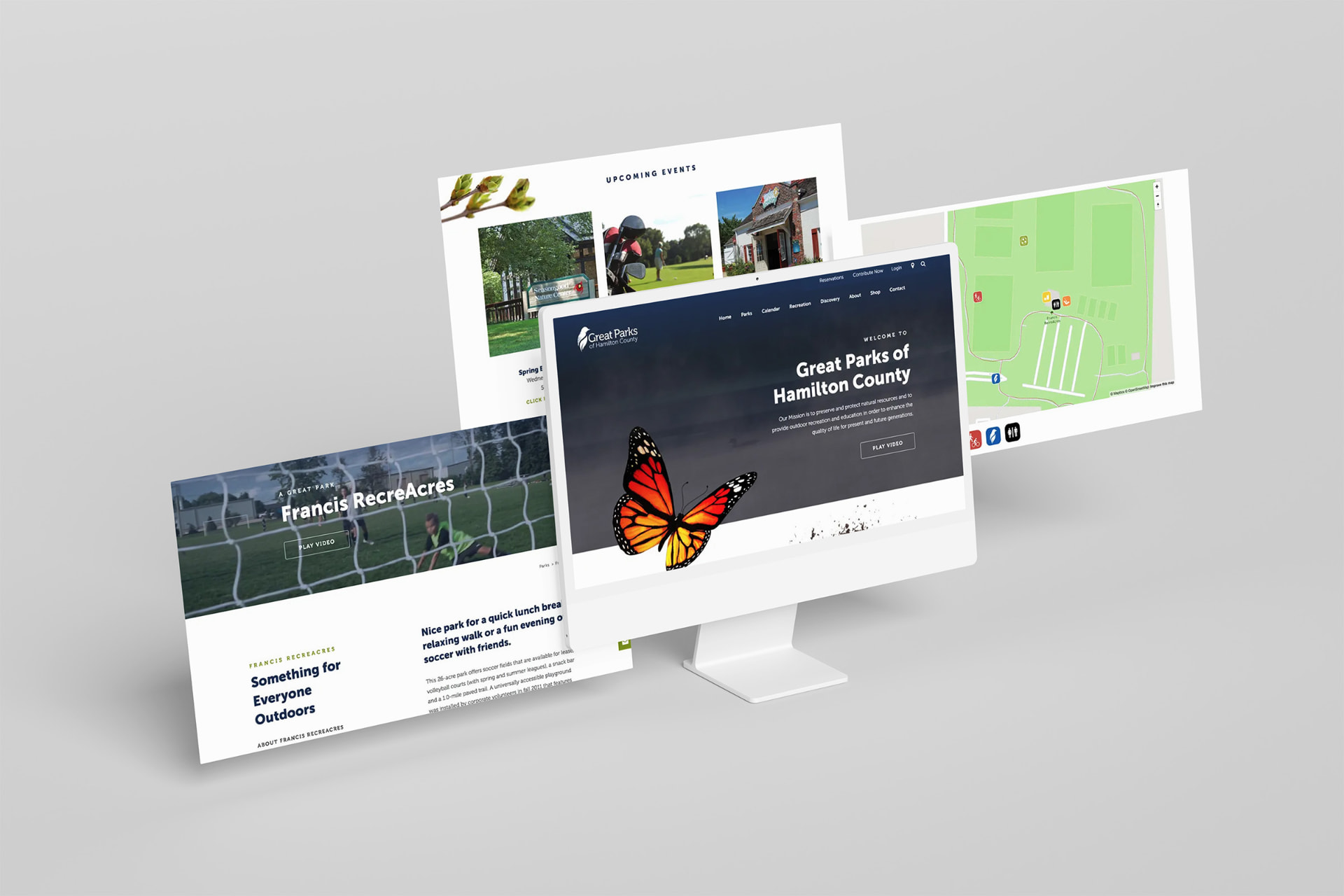
Great Parks of Hamilton County website home pageGreat Parks Francis RecreAcres park detail page
04

Creative System

A site architecture built for 500,000 visitors and 17 parks — then improved four times.

Version 1 — Foundation Designed and built the first complete digital presence aligned with Great Parks' new brand identity: full site architecture, visual design system, interactive trail maps powered by KML data, events calendar integrated with third-party ticketing via Governor CMS, and a content management framework that Great Parks staff could operate independently. The mandate was to match the beauty of the new brand while making a genuinely complex content ecosystem navigable for a universal audience.

Interactive touchscreen experience Following the website launch, the engagement expanded into the parks themselves — designing interactive touchscreen interfaces deployed at locations throughout the park system. The work extended the digital brand into the physical visitor experience, giving guests an interactive information layer at the point of discovery rather than only at home before arrival.

Versions 2, 3 & 4 — Evidence-Based Evolution Each subsequent version of the site was built on behavioral evidence from the version before it. Analytics data identified where visitors struggled, what content they sought most, and where the experience broke down. Design decisions in each iteration were traceable to specific user behavior patterns — not aesthetic preference or organizational assumption. Over four versions and eight years, the site became progressively more usable, more efficient, and more aligned with how real visitors actually used it.

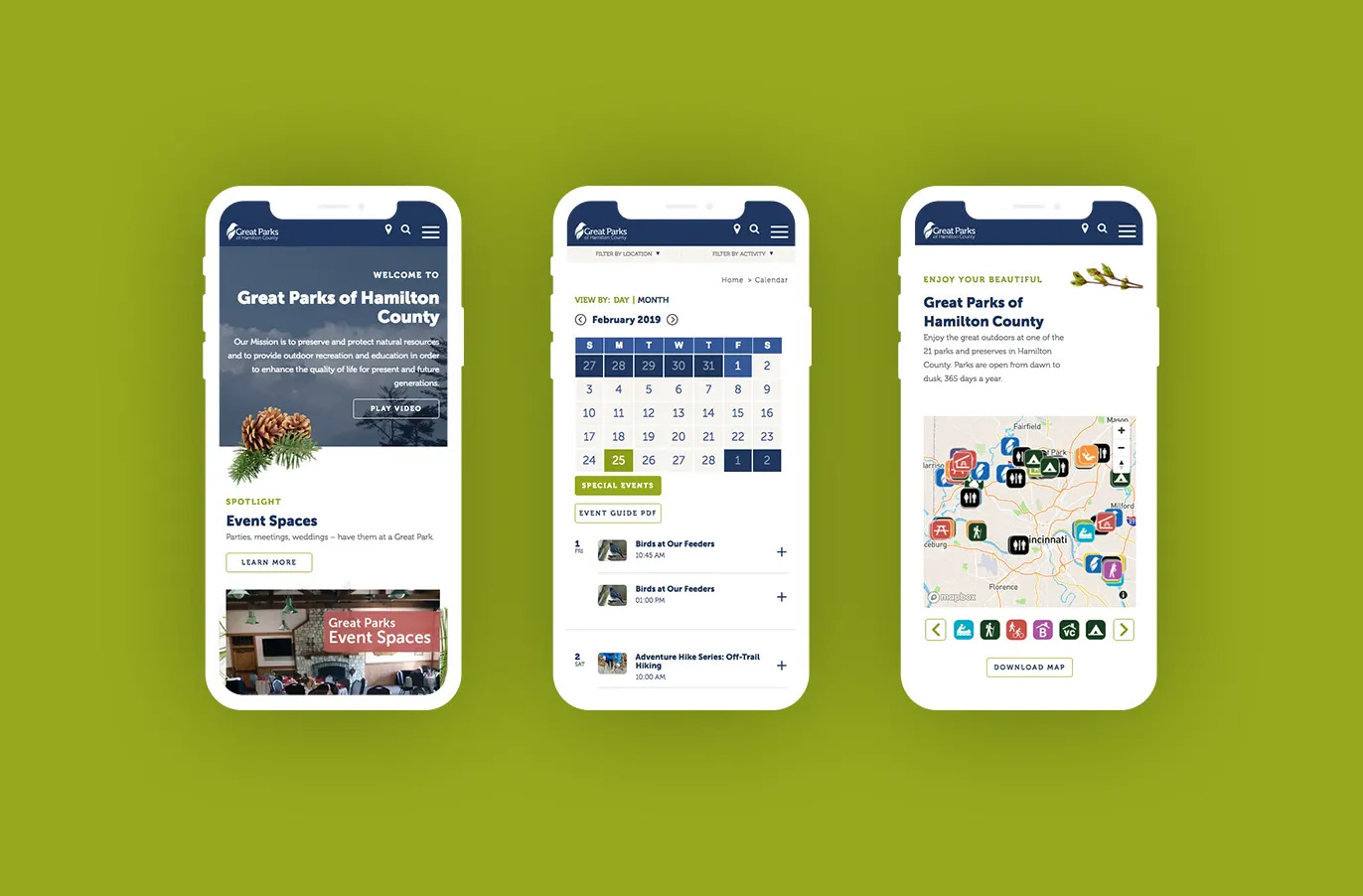
Great Parks of Hamilton County responsive website shown on three mobile devices
05

Organizational Impact

Eight years. Four versions. One partner.

An 8+ year creative partnership The most significant result of this engagement is the engagement itself. Great Parks has commissioned four major versions of their website over more than eight years — returning each time to the same creative partner. In an industry where client relationships frequently end after a single project, sustained partnership at this scale reflects consistent delivery, genuine organizational trust, and a creative process that demonstrably improved the product over time. That's not a vendor relationship. That's institutional creative leadership.

500,000 visitors served annually The Great Parks website serves half a million visitors a year — members of the public seeking trail information, event registrations, park hours, program details, and activity planning. Every usability improvement made across four versions represents a direct improvement in how that half-million people experience the park system before they ever arrive at a gate.

17 parks, one coherent system The information architecture built across these engagements organized 17 parks, 4 conservation areas, hundreds of annual events, trail data, and program registrations into a single navigable system — without losing the specificity of individual park identities or the utility of detailed local information.

Data-informed design as a repeatable process The iterative methodology developed across this engagement — instrument version one, analyze behavior, redesign by evidence — is a transferable creative operations model. It's the difference between a website that reflects what an organization thinks its visitors need and one that reflects what visitors actually do.